



Author|Uta
Editor | Liu Jingfeng
In the United States, on average, one in five Black people wears a wig made in Xuchang, China.
Black women’s “preference” for wigs stems from a social “discipline.” The dominant gene for curly hair was once associated with racial discrimination and humiliation suffered by Africans.
In the 20th century, American anthropologists would insert a pencil into the hair of Black people and have them shake their hair. If the pencil didn’t fall, the person would be identified as of African descent and subjected to the highest level of discrimination. Although New York legislated in 2019 that Black people have the right to keep their “natural hair,” in recent years, the association between Black people’s social class and hairstyle has become deeply ingrained—Black celebrities, represented by Kim Kardashian, are always depicted with long, straight black hair.
Middle-class Black women spend more money on their hair than on their clothes.

Source: ins
This “invisible” market has become visible data in recent years—the #wig hashtag on TikTok has been viewed 30 billion times, proving the huge potential of this market.
Chinese companies are seizing this opportunity.
On YouTube, the wig brand UNice boasts 1.29 million subscribers and sells wigs to more than 120 countries worldwide, with annual sales exceeding 1.2 billion RMB.
UNice is not an isolated case. Yue Peng, founder and CEO of ZBANX (a Chinese design company), told us that some of his clients also have annual incomes reaching nine figures.

Image source: UNice official website
Chinese brands going global seem to have finally connected with the needs of overseas consumers.
When discussing the hot trends for brands going global in 2026, Yue Peng frankly stated that the issue of “second-generation factory owners” is not just a hyped-up topic, but rather a reality for Chinese brands, especially those going global.
“90% of our clients are second-generation entrepreneurs who are taking over their businesses. Most of these second-generation entrepreneurs have studied in Europe and America and have a good international perspective. They already have experience in factories, OEM or ODM, but they lack the ability to define products and market insights.”
They embraced new technologies and were riding the wave of opportunity, but like most players, they faced immense anxiety.
Looking further, this anxiety mainly stems from four aspects:
First, when products are exported overseas, how to accurately grasp the consumption habits of local markets?
Second, for products that are in demand overseas but lack usage scenarios domestically, how to understand the usage habits of the target audience?
Third, how to build trust through localized communication and explanation?
Fourth, how to convert market enthusiasm into sales share?
The accumulation of uncertainties has led to a shift in overseas marketing from an efficiency-oriented approach to a results-oriented approach.
“Just looking for excitement and making a splash isn’t enough; you have to make money.”
For businesses, the calculations begin from day one:
How much does it cost to make a mold?
What is the minimum order quantity (MOQ)?
What are the factory’s payment terms?
Compared to the domestic market, cross-border business is also constrained by logistics—sea freight takes two to three months to arrive, while air freight incurs exorbitant costs. Another crucial issue is that once goods are shipped overseas, the cost of bringing them back to China is higher than the cost of destroying them locally.
“This means there’s no turning back when going global, naturally leading to greater uncertainty and anxiety. For clients, data-driven certainty is crucial to mitigating this anxiety, which is precisely what we are striving for. AI has also provided significant assistance in these processes,” Yue Peng explained.
Undoubtedly, in 2026, overseas marketing is undergoing a profound transformation.

According to Yue Peng, founder and CEO of ZBANX, the focus of overseas marketing in 2026 will undoubtedly be branding.
For some time now, Chinese brands seem to have rarely been telling their stories in overseas markets.
The reason behind this is that most manufacturers believe that establishing a successful sales model in a short period is the best way to convert brand awareness into profit. While brand building through content is not undesirable, it simply requires too much time.
At that time, most Chinese brands going global focused on cost-effectiveness as their core competitiveness, relying on major e-commerce platforms and operating in a shelf-based manner, with a focus on the supply chain going global.
However, as manufacturers enter a phase of overcapacity, the demand from upstream brands cannot fully cover production, naturally leading to a huge market for leftover stock. In an environment where logistics and payment rules are becoming increasingly mature and standardized, this market has almost completely eroded the profits brought by “information asymmetry,” making it difficult to open up the market solely through low prices.
“So there are only two options left: either cut corners and cover production costs, or start pursuing brand building. Obviously, the first option is not advisable.”
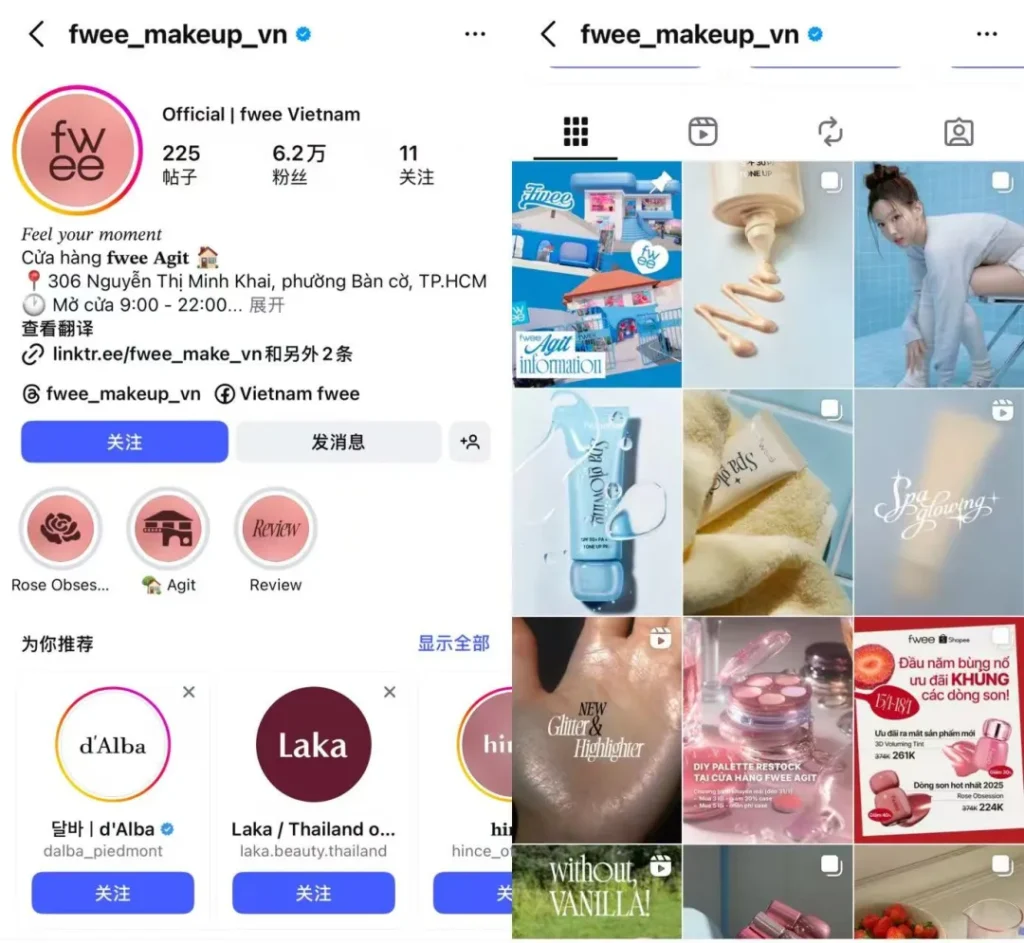
Korean brands are branding themselves on Instagram
In fact, the “brand premium” imposed on Chinese manufacturers in recent years has enabled many owners of European, American, Japanese and Korean brands to earn their first pot of gold.
Yue Peng told us that the black wigs exported from Xuchang were already being sold overseas as early as the Ming and Qing dynasties. A few years ago, the ex-factory price of a wig was around $10, but it would be priced at $20 on Amazon, and the price would rise to about $100 on independent websites. However, in hair salons run by Japanese and Korean owners, it could sell for $200 a wig.
The price of the same wig increased 20 times, with nearly half of the profits being “taken away” by overseas brands.
“What separates our production chain from overseas consumers is actually our ability to do marketing and tell stories,” Yue Peng frankly stated.
He stated frankly that the advantage of Chinese companies lies in their responsiveness. Once there is positive feedback from the market, products can be quickly optimized and iterated. “China’s supply chain has been trained for many years by upstream OEM and ODM companies, evolving to the point of full automation and even lights-out factories. We only need to complete the ‘storytelling’ to achieve unimaginable growth.”
Fortunately, leading domestic brands have taken the lead in branding. As Huawei, Xiaomi and other brands continue to expand their voice and brand awareness overseas through new product launches and offline activities, To C products, especially some electronic products that have left DJI to start their own businesses, have started to build their brands with high-end strategies after receiving funding. Made in China is no longer just associated with “cost-effectiveness” but is gradually taking on a new image and even becoming a pioneering brand that is a fashion icon.
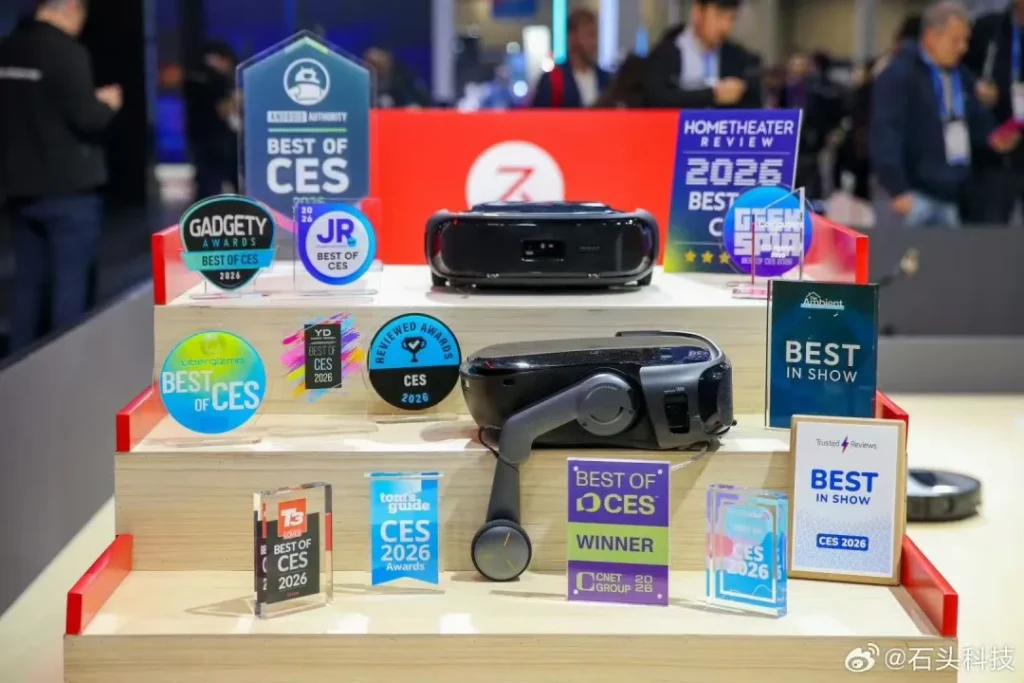
Roborock showcases its products at CES. Image source: @Roborock
For example, the Ebike brand from Jinhua, Zhejiang, recently launched the locally popular “Cargo” in Europe. “Many hilly areas in Europe make it inconvenient to drive to camp, and coupled with the strong environmental awareness of local consumers, riding a Cargo will look particularly fashionable.”
Importantly, brand growth is not only the starting point of long-termism, but can also become a moat for compliance when going global. “Only when brands start to pursue high gross margins and high premiums will they have extra gross margin to pay for compliance.”

If you were to summarize overseas marketing with a formula, Yue Peng’s answer would be: Create Trust – Convert Trust – Trust Audit.
The first stage involves building connections with consumers through brand storytelling. The second stage involves using extensive data comparisons to support secondary marketing efforts, effectively converting existing trust into sales.
In the trust audit phase, the most important aspect is data tracking and aggregation. Today, consumers encounter approximately 15 to 20 touchpoints from initial contact to purchase, including but not limited to streaming media like TikTok and fashion platforms like Instagram. Broadly speaking, each touchpoint incurs costs and creates value for customer conversion. Therefore, a perennial question remains—how to evaluate performance?
In the past, most brands going global distributed their channel advertising to separate service providers, resulting in information silos between channels, each believing it to be the last click. However, in reality, only by combining data from various channels, website tracking data, and store sales data can brands find the most accurate path.
With the rise of social media in the past two years, information fragmentation has deepened, the hegemony of platforms has been gradually weakened, and the diversification of channels has become more and more obvious. After the trust audit is completed, it is becoming increasingly difficult to evaluate the overall ROI through channel data and decide on future budget allocation.
“No matter the stage, it is a complex judgment, and by using AI we can make the data as accurate as possible, so as to achieve the most objective and correct judgment of the situation.”

Yue Peng explained, “AI is actually more like a quantitative investment.”
However, it’s undeniable that this quantitative investment still has its barriers to entry.
“Although progress is relatively fast, AI still creates illusions in the industry. The black-box nature and one-way nature of AI are not very effective in major decisions or serious scenarios. For overseas marketing, the key is to connect the links and then conduct a lot of A/B testing.” For example, GEO (Generative Engine Optimization), which was hotly discussed recently, is not as optimistic as imagined after using it.
In Yue Peng’s view, the effectiveness of AI in the industry at present still depends on the professionalism of the users themselves. “Although the industry is chasing the CMO agent trend, to realize the capabilities of a CMO agent, one must first be a CMO.”
Yue Peng also admitted that although practitioners still need to find a balance with AI, AI will undoubtedly become an industry trend in 2026 and even the next five years.

Of course, AI has already deeply penetrated every aspect of marketing.
One of the most typical uses is building industry knowledge graphs.
“The ultimate core of marketing is still selling goods, which requires us to have a good understanding of the products in the industry. We have connected with 200+ users and our business scope spans 100+ industries. We quickly move between various clients, which is actually achieved by using AI to enhance our knowledge. This is how we can better understand our users.”
Secondly, the flexible use of internet celebrities.
Compared to the industry’s pursuit of influencer marketing, Yue Peng holds a more sober view on the matter.
KOLs typically possess three qualities: influence built by their large fan base, professionalism, and quality work. These three qualities often cannot coexist in one person and may even be mutually exclusive, with one rising as the other falls.
“To some extent, the conversion of influencers actually depends on the influence of their content.” Based on this, the necessity of building a content factory with the help of AI becomes paramount.

This is also why ZBANX (菜板科技) chose to integrate with Alibaba Cloud’s Qwen-Plus large language model.
In his view, “Domestic models are growing very rapidly, especially Alibaba Cloud’s Qianwen large-scale model, which is very stable. Actually, using overseas models is not very convenient; factors such as data collection and cross-border networks can cause problems when using them.”
More importantly, domestic models, represented by Alibaba Cloud, are significantly cheaper while achieving the same results. “Although I can’t give a specific price, it’s a very important competitive advantage for us when choosing partners. In fact, from an industry and application perspective, Alibaba Cloud’s ‘Thousand Questions’ model has already broken stereotypes,” Yue Peng remarked.
At the same time, the coverage and resource abundance of cloud services have become the biggest differentiator for brands’ overseas marketing infrastructure – sufficient local resources can be transformed into more accurate data references.
This also forces cloud services to further expand their global footprint, thereby leveraging the influence of their global reach to deeply satisfy user needs and create a positive cycle of cooperation.
Take Alibaba Cloud as an example. On January 21, Alibaba Cloud once again demonstrated its progress in globalization, officially announcing that its business now covers 29 regions and 92 availability zones worldwide, firmly maintaining its leading position as an IaaS service provider in the Asia-Pacific region. In 2025, it plans to add data centers in Japan, South Korea, France, and Dubai, and in 2026, it will expand to countries such as Brazil, Malaysia, and the Netherlands.
“Cloud resources are now equivalent to the water, electricity, and gas of our business,” Yue Peng explained. In the context of AI decision-making and AI marketing, it is impossible to spend time and energy on “repetitive manufacturing.” Enterprises are inevitably driven to make in-depth use of native applications and computing power on the cloud ecosystem. At the same time, a large number of independent website customers are actually building their sites on the cloud. “Through Alibaba Cloud, we have also met many overseas customers.”
Undoubtedly, the integration of AI and the marketing industry has reached a crossroads. While utilization continues to increase, how to achieve a synergistic effect through more precise use and directional confirmation is perhaps a question that the industry needs to think deeply about.


